Saadiyat Island, Abu Dhabi
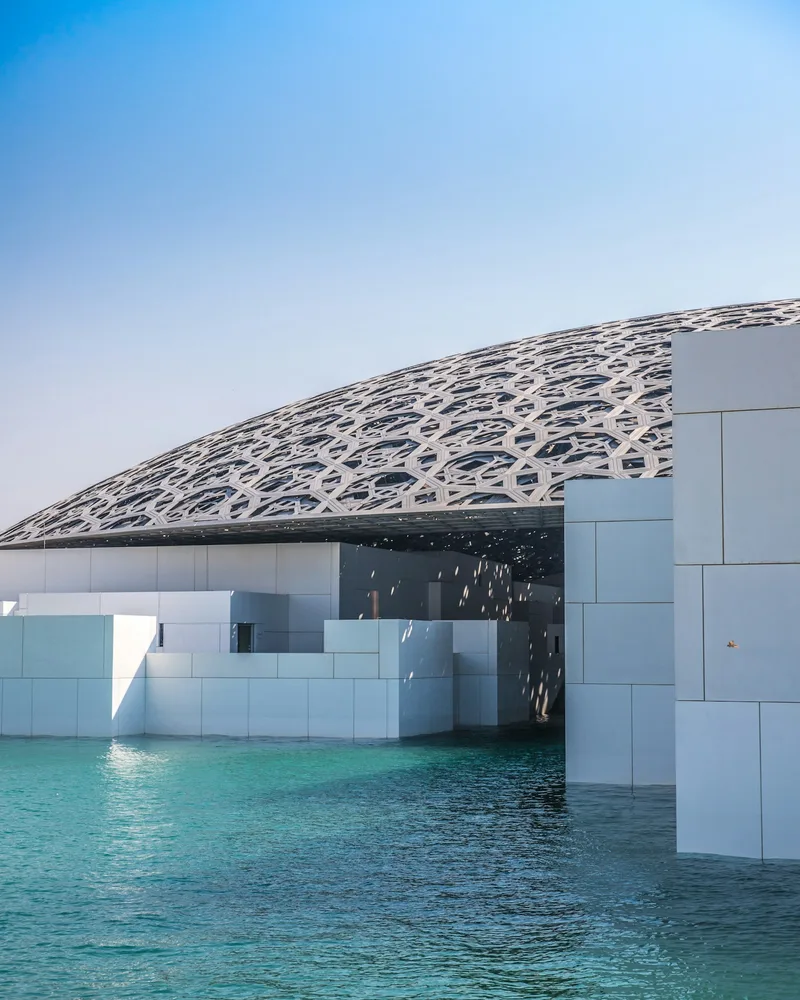
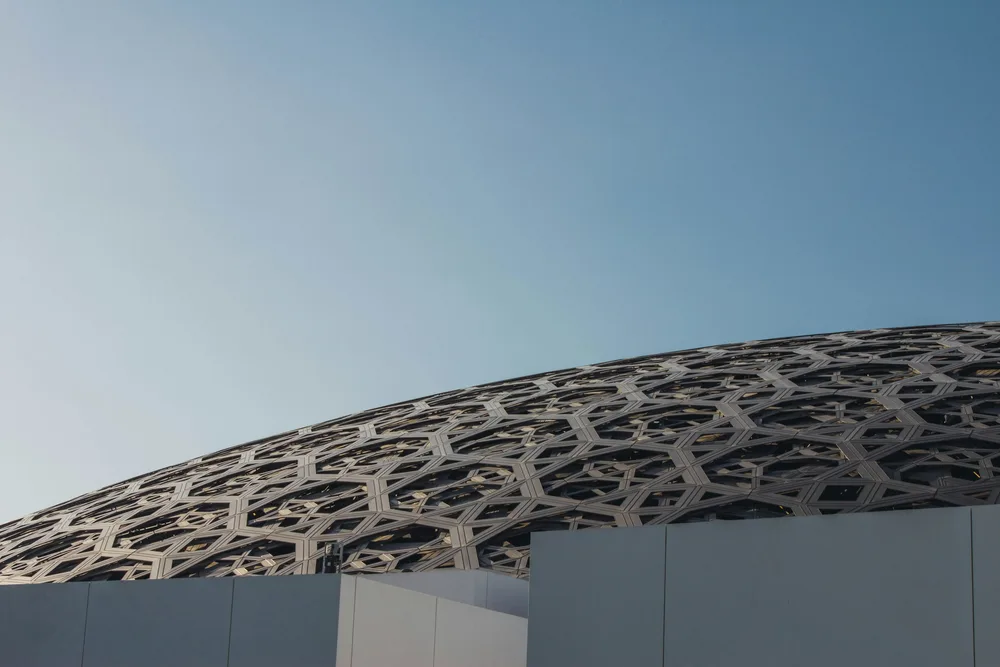
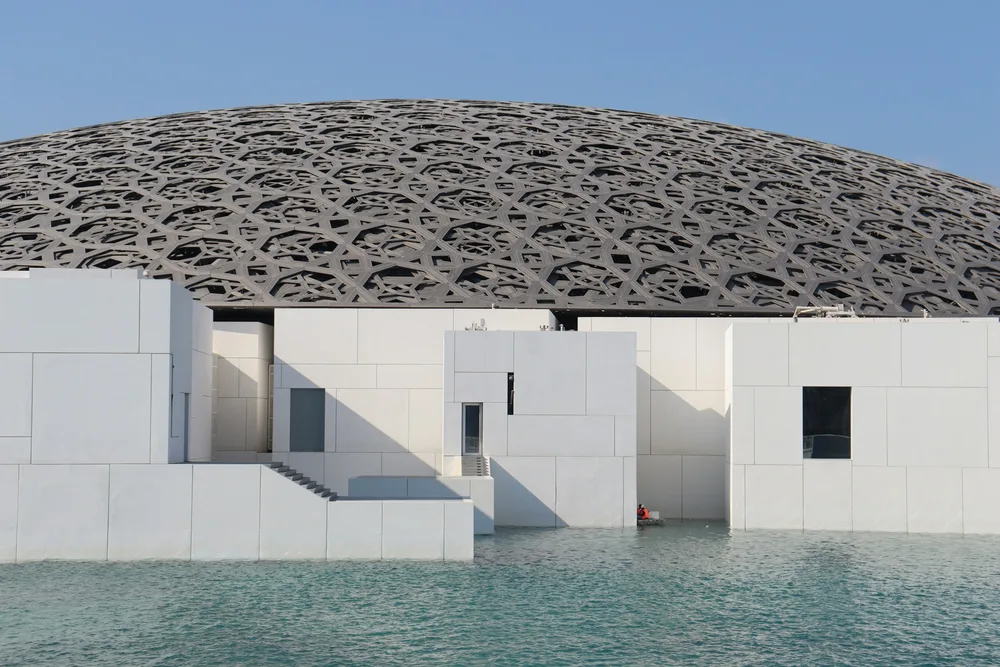
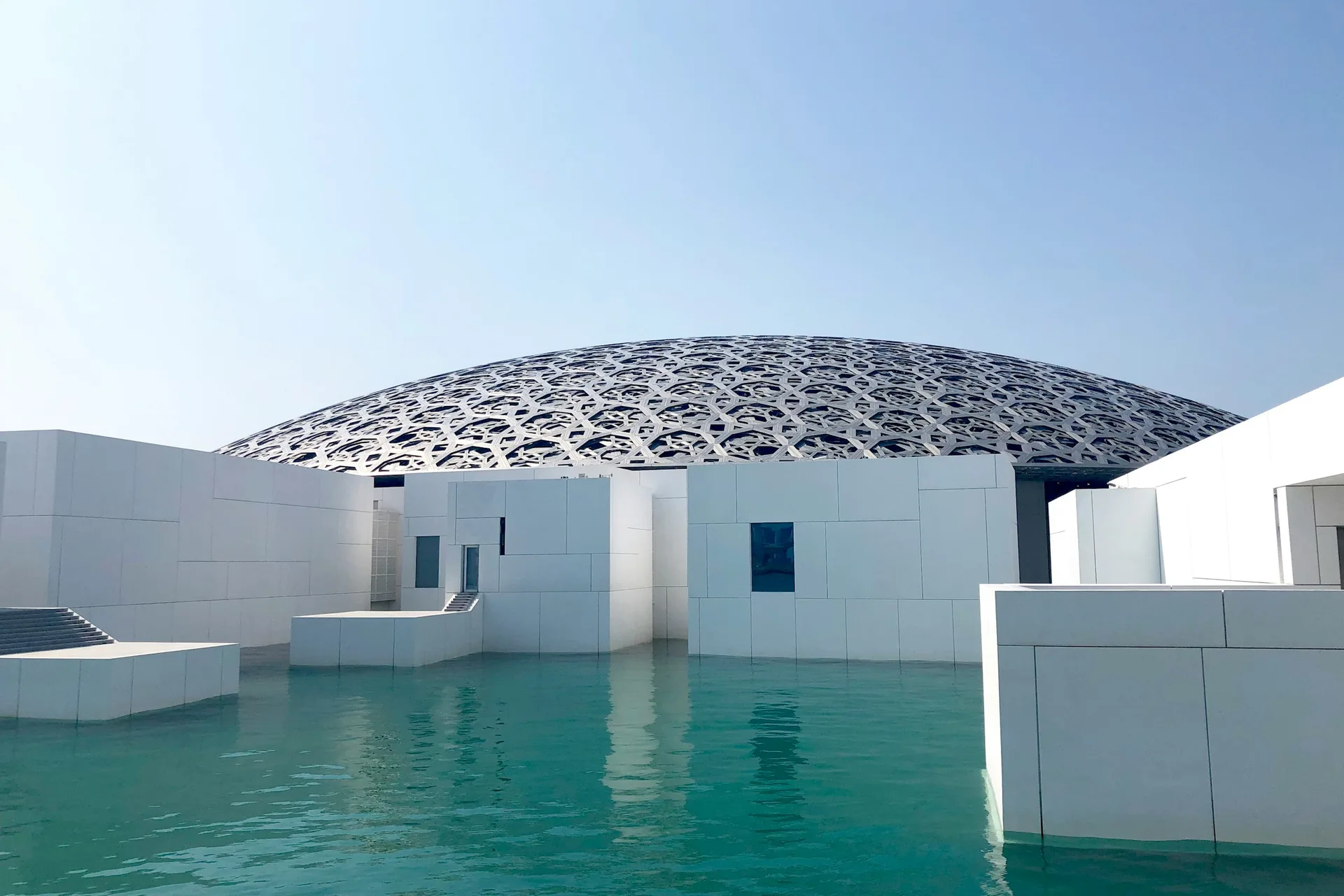
Some buildings you remember as much as anything inside them, and the Louvre Abu Dhabi is one of them. Jean Nouvel set his museum out over the Gulf so that the water laps almost to its walls, a low cluster of white galleries that seem to float on the sea, and crowned the whole thing with a vast silver dome more than two hundred yards across. You arrive along a causeway with the sea on either side, and the first impression is simply of lightness, of a museum that sits on the water as easily as a boat at anchor.
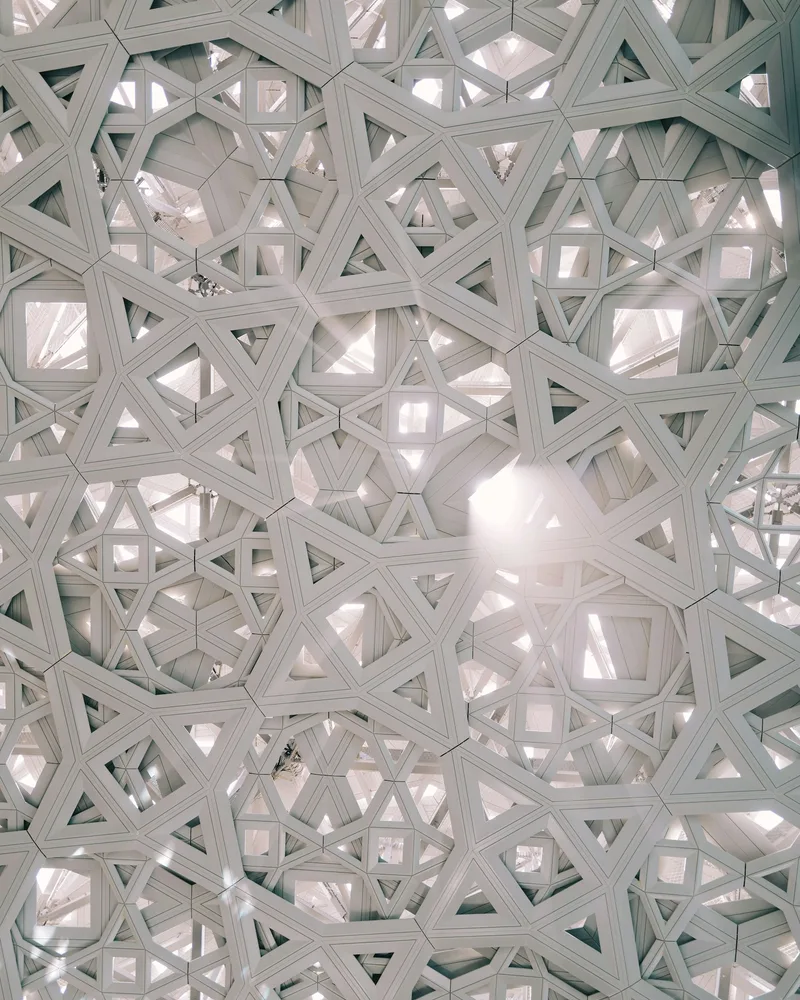
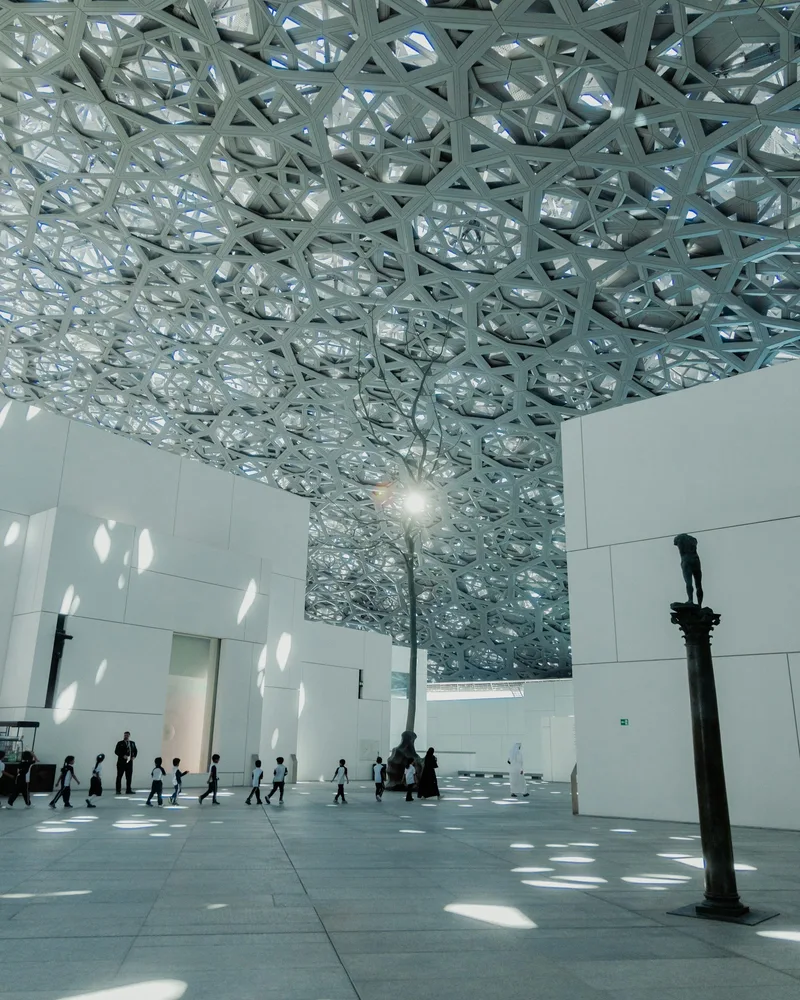
The dome is the heart of it, and it is unlike anything else. Nouvel layered nearly eight thousand metal stars in an intricate lattice, eight separate layers angled against one another, so that the sun filters through in thousands of shifting points. He calls it a rain of light, and that is exactly how it feels: you stand in the shaded plaza beneath the dome and the sunlight falls around you in a slow, drifting scatter that moves as the day turns, dappling the white walls and the water channels at your feet. It is cool and quiet and unhurried under there, the Gulf glinting between the buildings, and many visitors find the space beneath the dome as memorable as the galleries themselves.
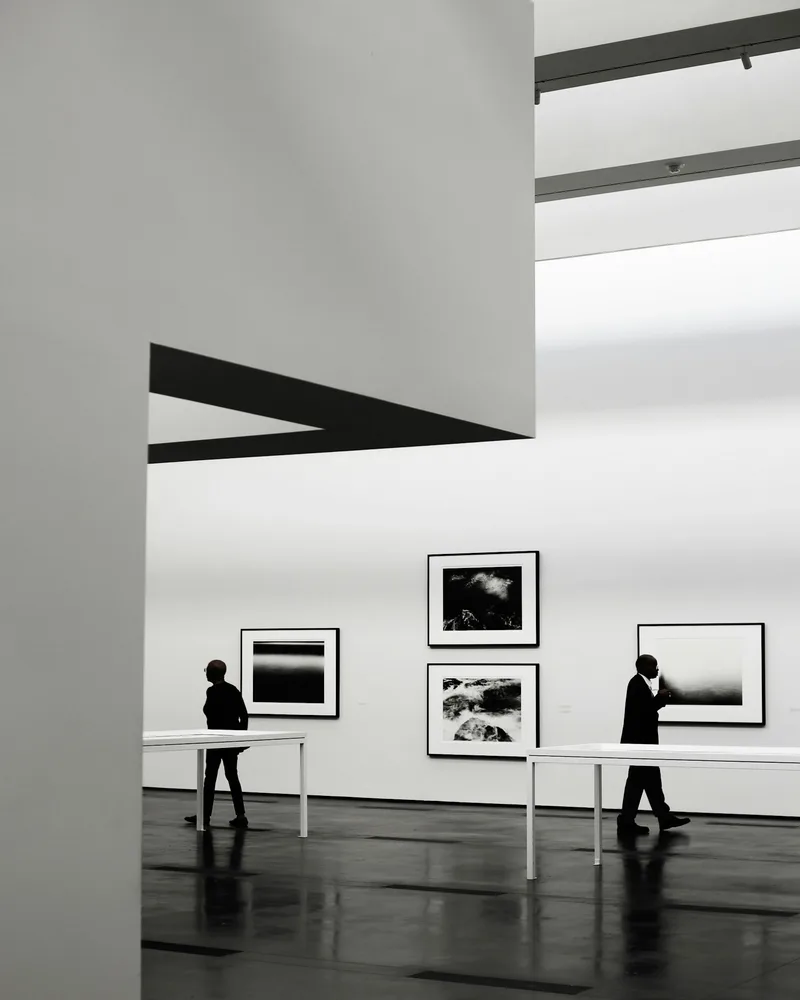
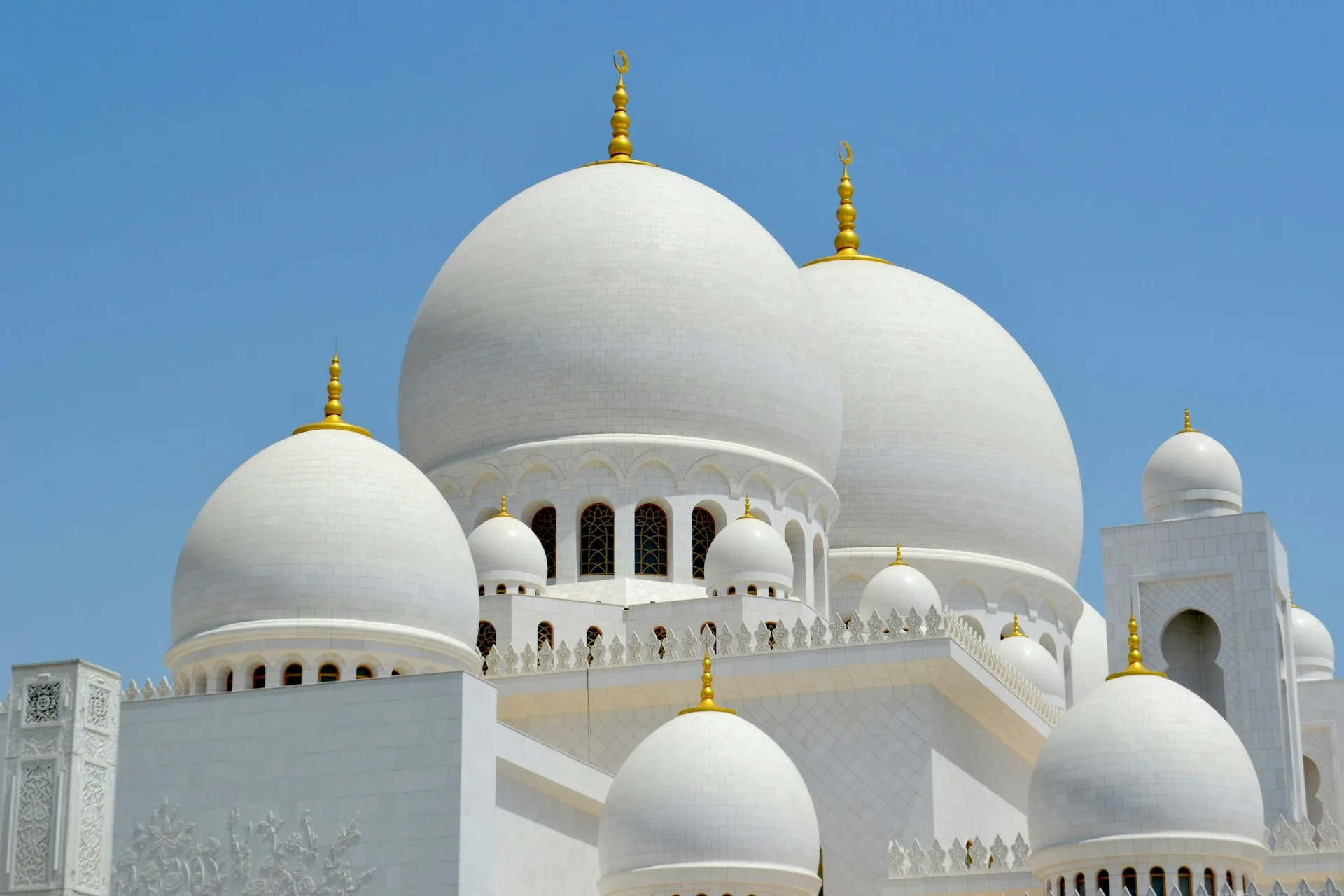
Inside, the collection tells a single story rather than dividing the world into separate wings. The galleries move chronologically through human creativity, setting works from different cultures side by side so that a Chinese bronze, a Mesopotamian carving, a Madonna and a page of the Quran can share a room and speak to the same human impulses. It is a fresh, generous way to see art, and it anchors the rising Saadiyat cultural district around it, a whole island given over to museums and galleries, with the Guggenheim Abu Dhabi and the Zayed National Museum still to come. We time a visit for the late afternoon, when the light through the dome is at its softest, and pair it with the Sheikh Zayed Grand Mosque for a day of the Emirates' grandest design.