


Tampaksiring & the villages above Ubud
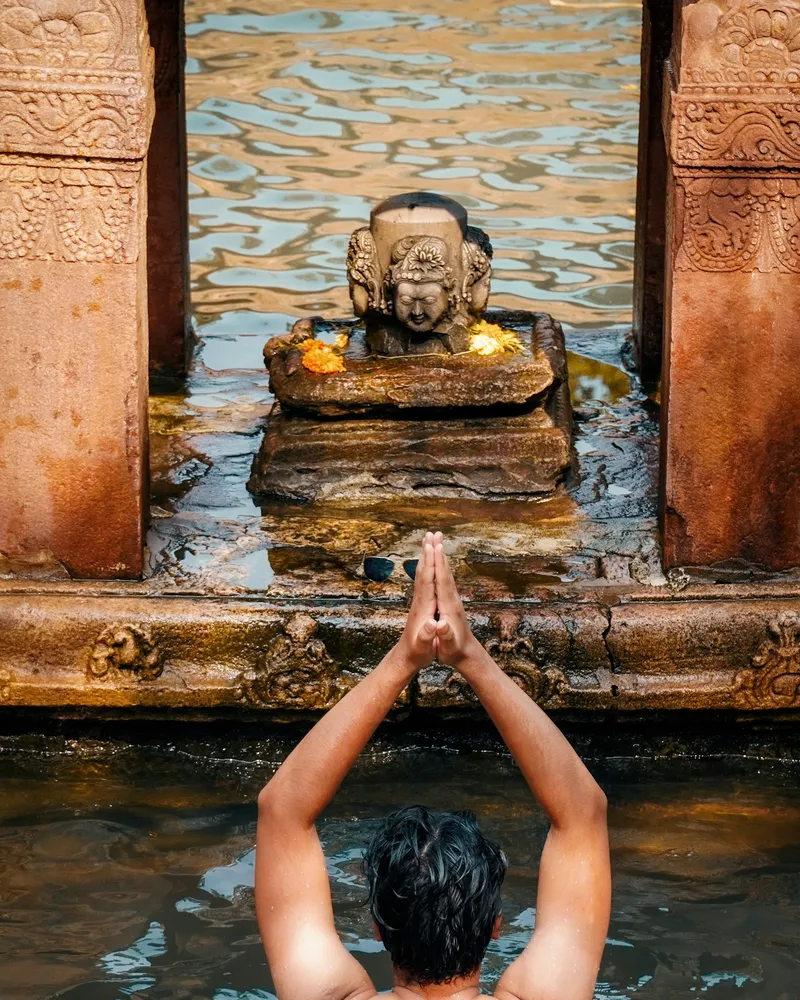
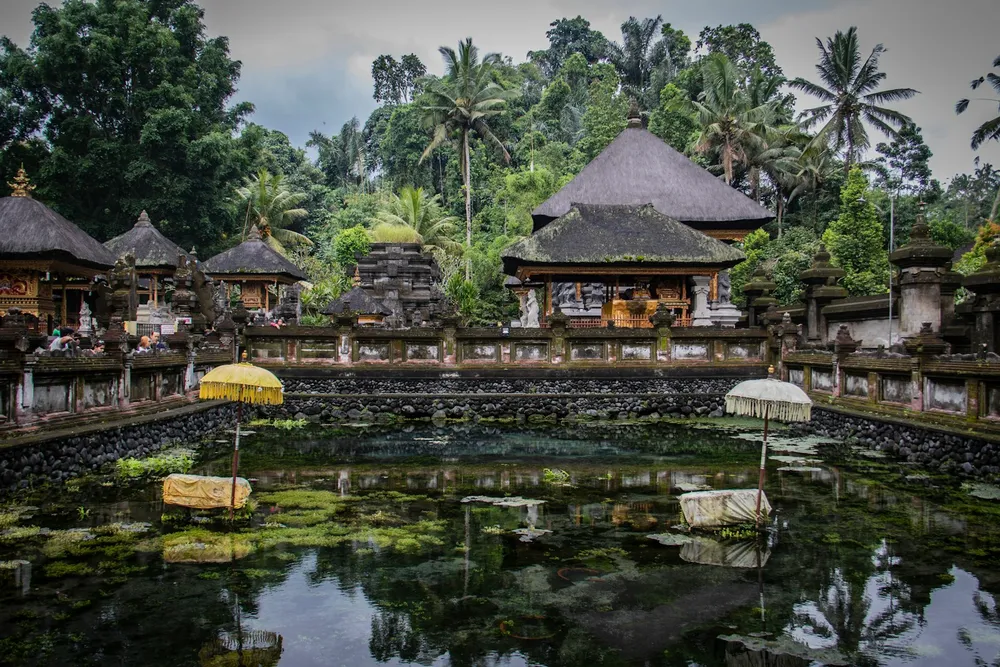
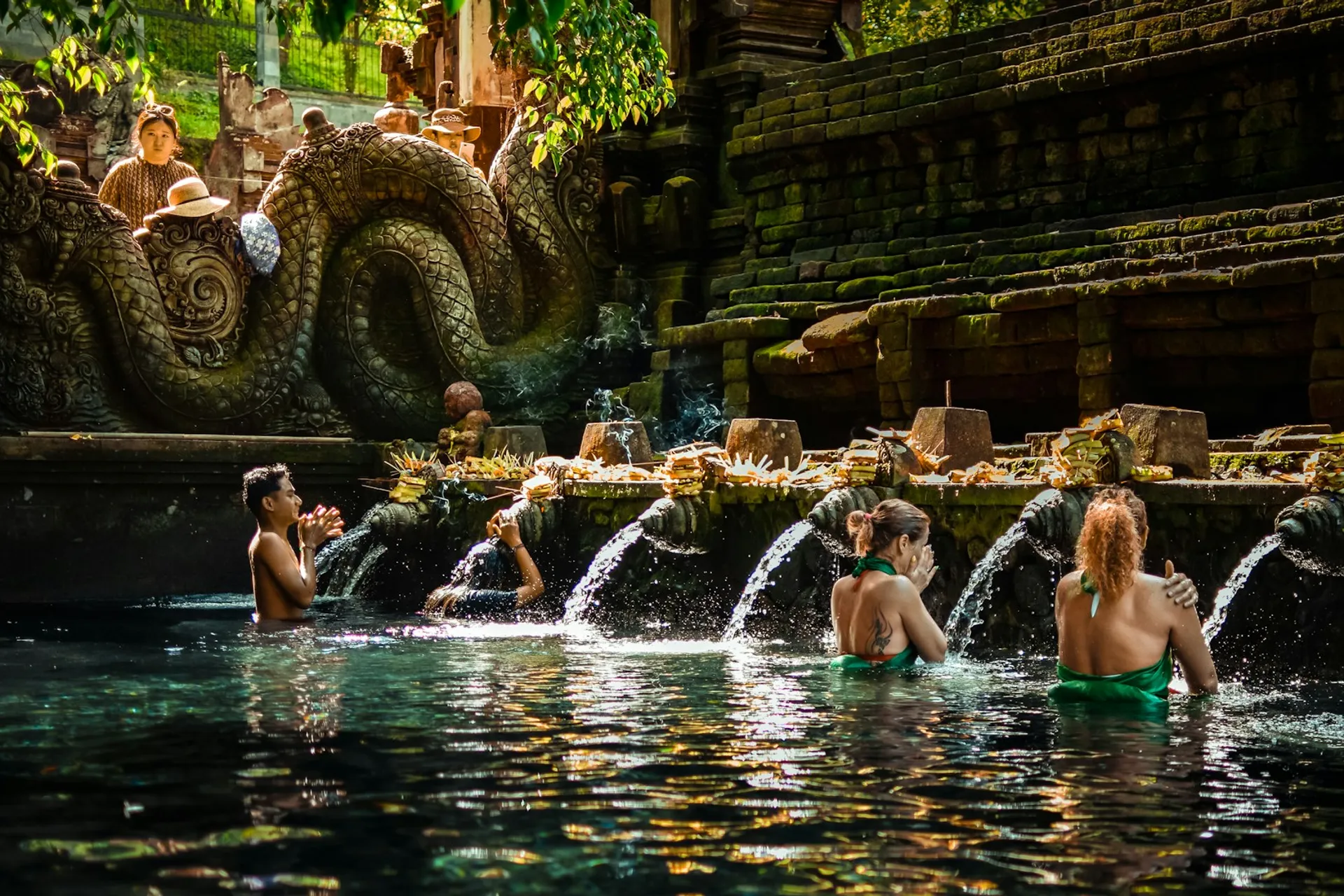
Balinese Hinduism is lived rather than displayed, and the quickest way to feel that is to stand waist-deep in the pools at Tirta Empul. The temple at Tampaksiring, half an hour northeast of Ubud, was built in the tenth century around a spring that bubbles up through black volcanic sand in a walled pool, and Balinese families have come here ever since to perform melukat, a ritual cleansing of body and spirit. The water is channeled into a long stone bath lined with carved spouts, and worshippers in sarongs move from one to the next, bowing beneath each stream, praying and letting the cold, clear water pour over their heads.
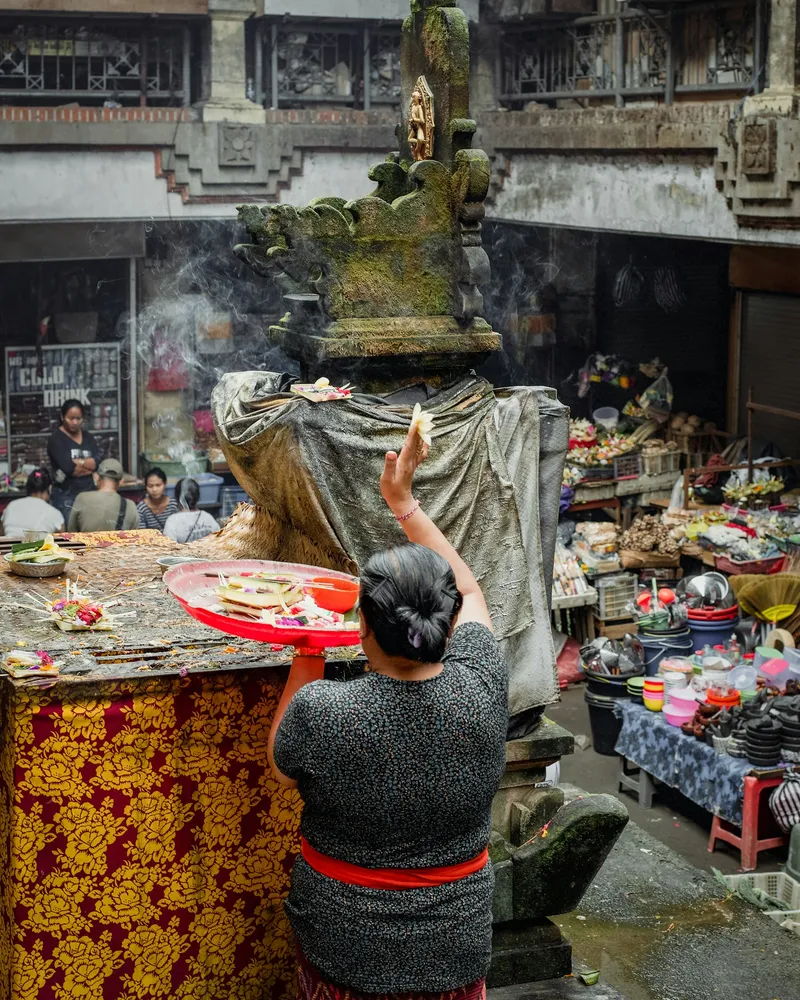
Visitors are welcome to take part, and done properly, with a Balinese guide who explains the order of the spouts and the meaning of each, it is far more than a photo stop. You change into a sarong, make a small offering at the shrine, and step into the pool to move along the line, skipping the two spouts reserved for the dead. The water is bracing, the courtyards are hung with incense and frangipani, and the whole thing has a calm, matter-of-fact holiness that stays with you. We go early, before the tour groups, when the pools are mostly Balinese families and the light comes low through the temple gates.
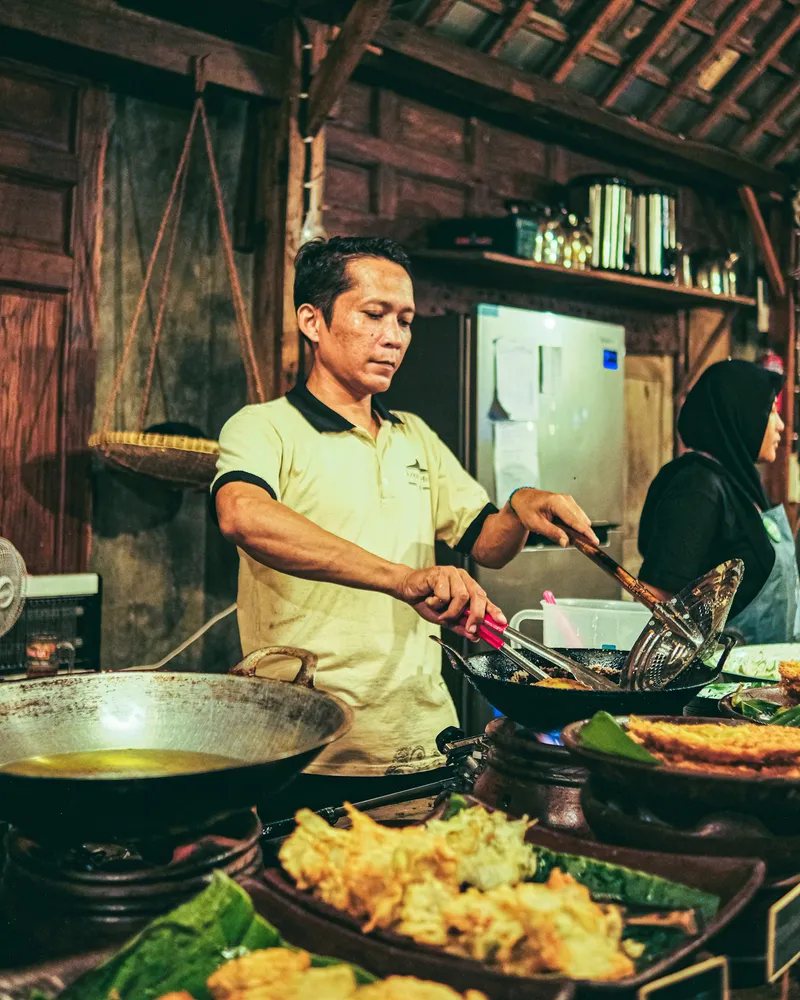
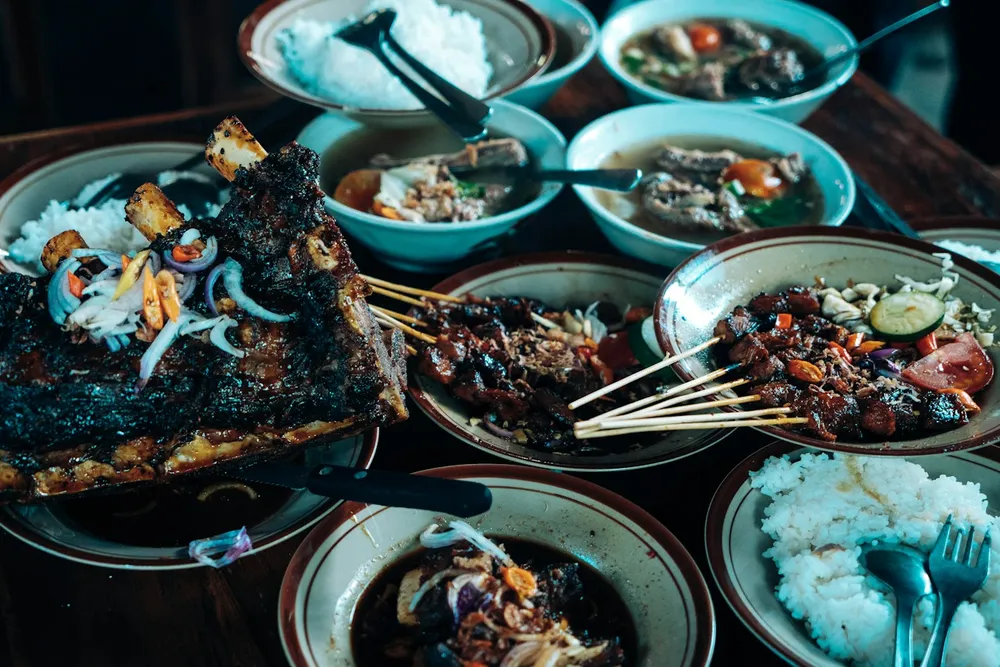
The second half of the day moves from the spirit to the stomach. In a village compound above Ubud, a family opens its kitchen and its courtyard for a cooking class that begins, as all Balinese cooking does, with the market: a morning walk among the chilies, galangal, turmeric and shallots that go into base gede, the great spice paste at the root of the island's food. Back in the compound you pound the paste by hand, wrap minced fish or chicken on lemongrass stalks for sate lilit, steam a pepes in banana leaf and build a plate of mixed lawar, then sit down to eat it together under the shade of the family temple. It is the most generous afternoon in Bali, and we make sure it falls on a day with nowhere else to be.