Bangkok
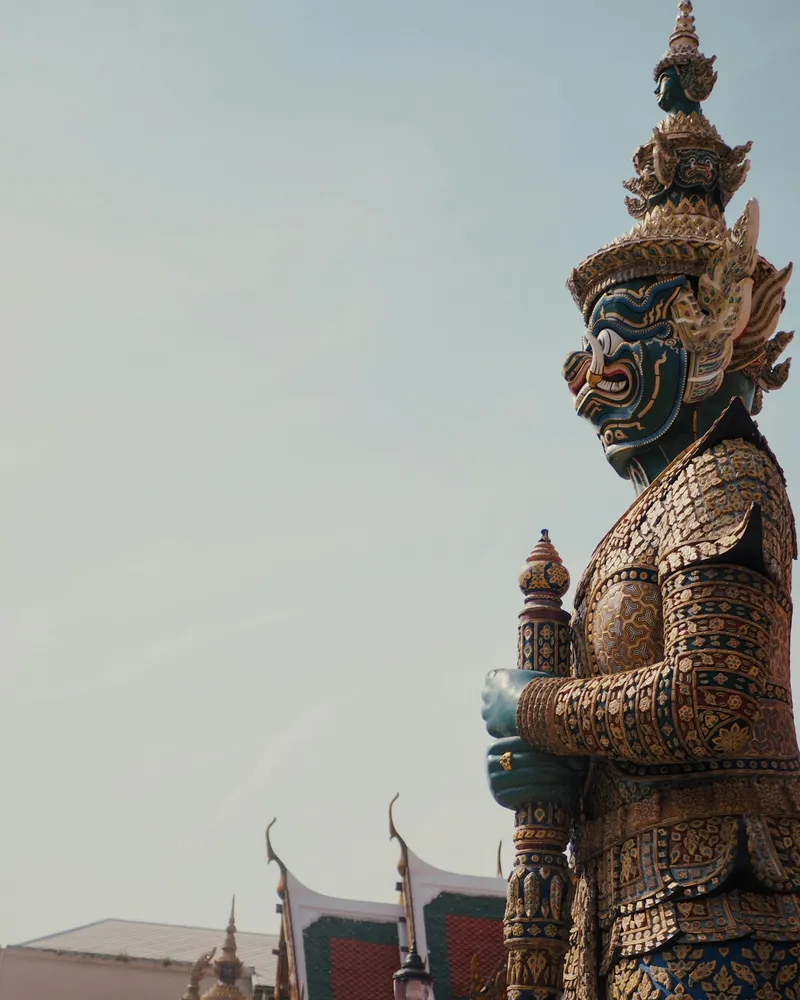
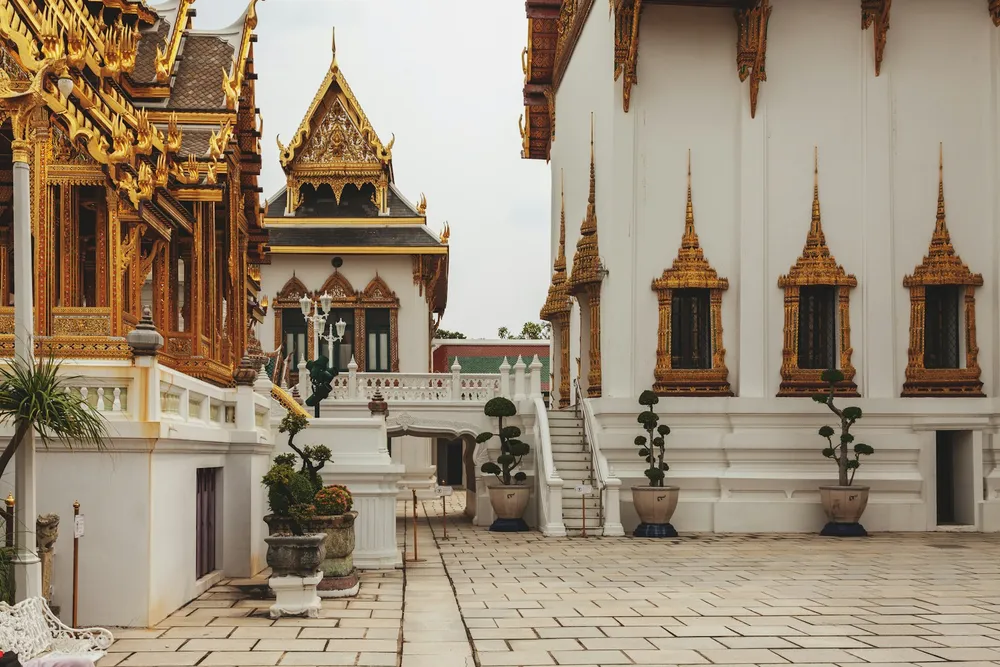
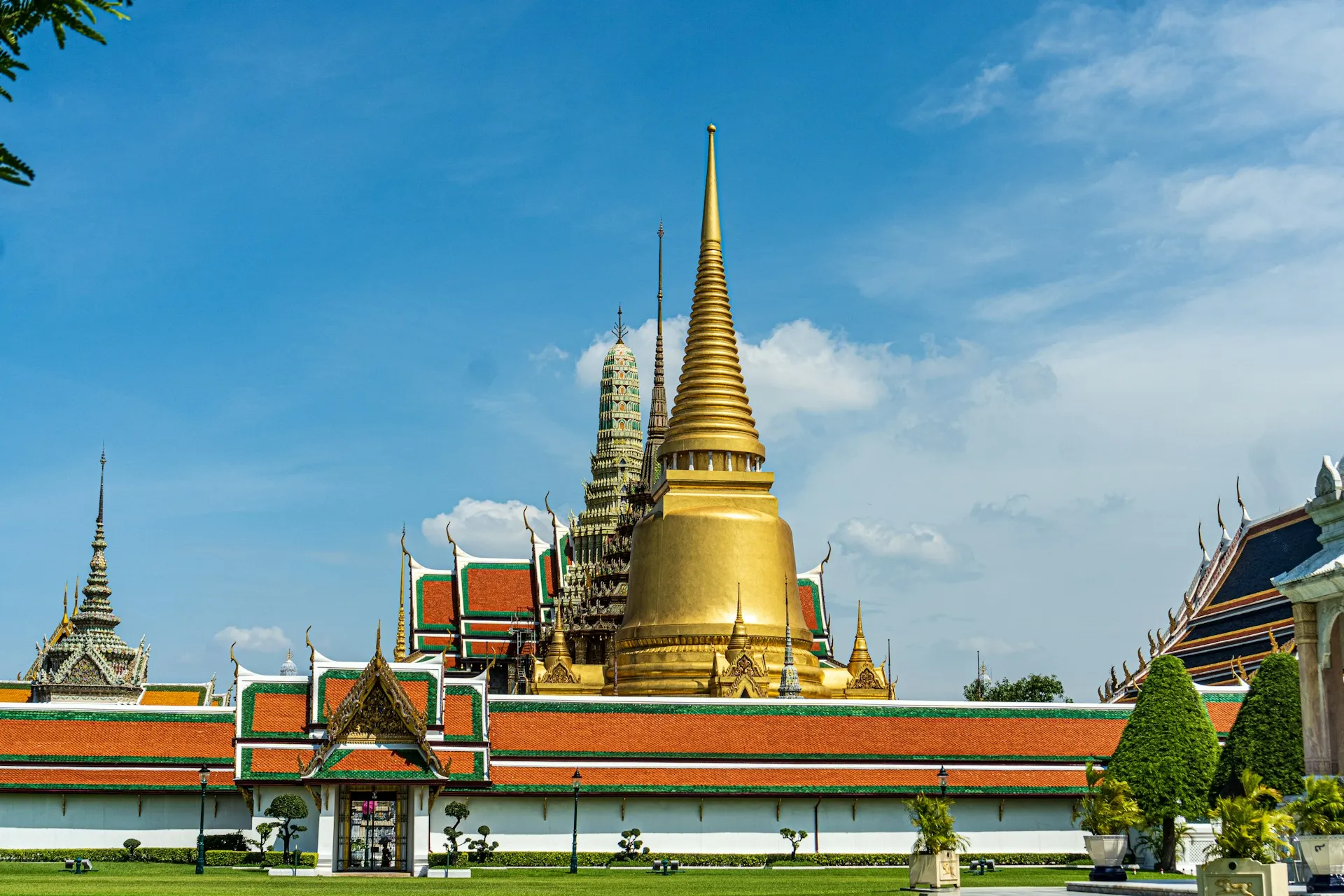
On a bend of the Chao Phraya at the heart of old Bangkok stands the Grand Palace, the walled city within a city that King Rama I raised in 1782 when he moved the capital of Siam across the river. For a century and a half it was the home of the Thai kings and the seat of their government, and though the royal family no longer lives here, it remains the ceremonial center of the kingdom. The scale lands the moment you pass the whitewashed walls: a dazzle of gilded spires and glazed tiles, mosaic-covered pillars that catch the sun, ranks of towering demon guardians and, at the center of it all, the temple of the Emerald Buddha, the most sacred image in Thailand.
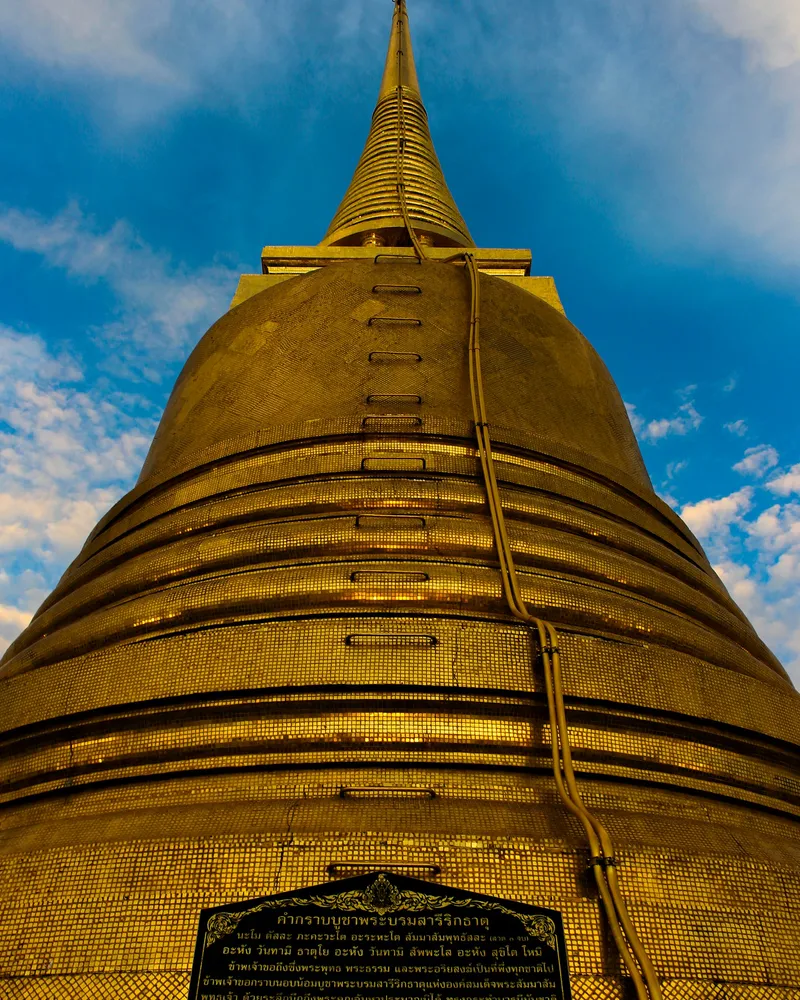
The Emerald Buddha itself is surprisingly small, a figure of dark green jade a little over two feet tall seated high on a golden altar, and it is dressed in one of three seasonal robes that the King changes in a ceremony as the seasons turn. Around it, Wat Phra Kaew is a riot of gold leaf and mirrored glass, with a golden chedi, a library of scripture and a long cloister painted with the whole of the Ramakien, the Thai telling of the Ramayana. Beyond the temple, the palace buildings range from pure Thai halls to the extraordinary Chakri Maha Prasat, a European palace crowned with Thai spires, which tells you a good deal about the kingdom's nineteenth century.
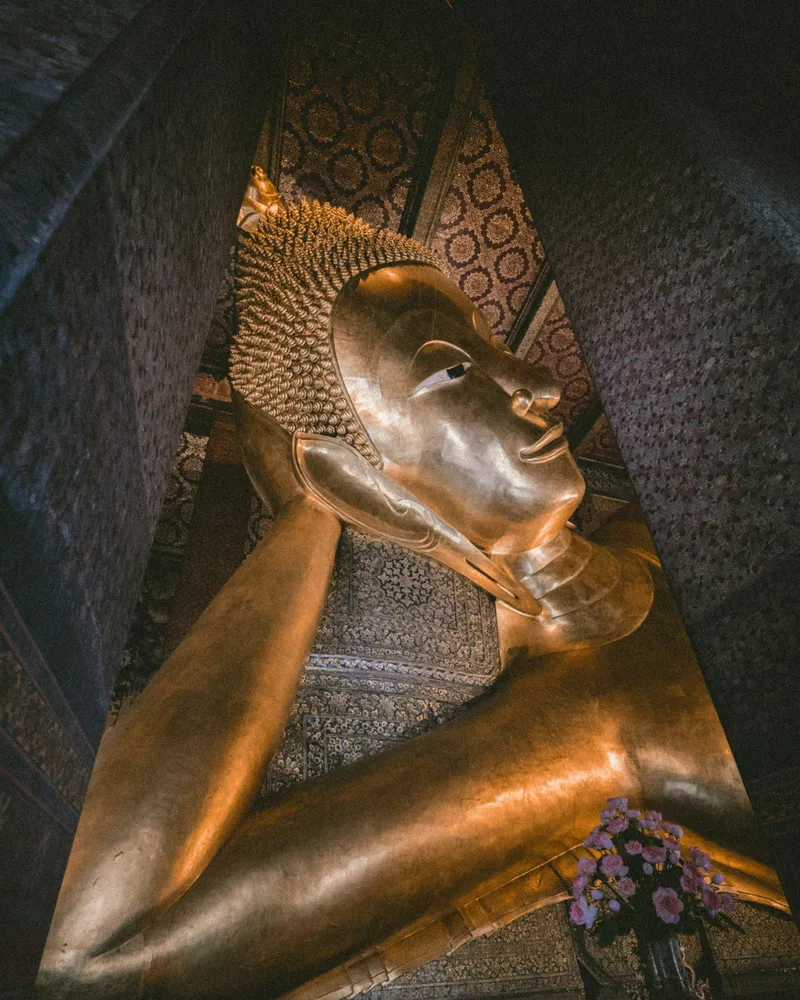
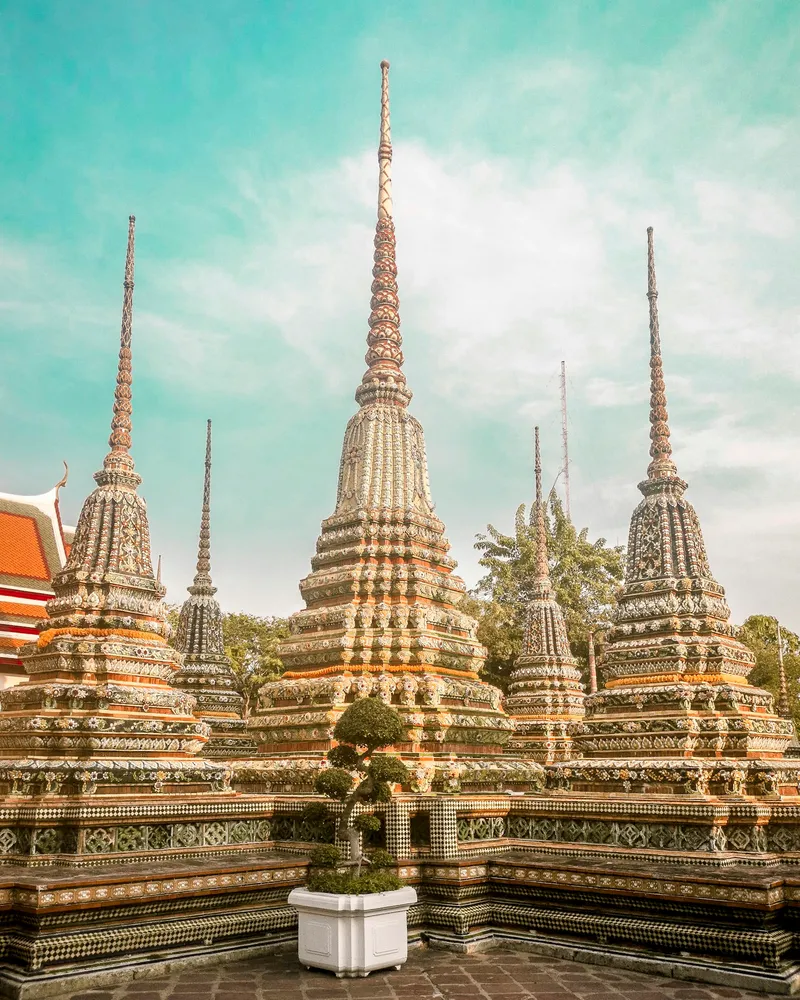
A ten-minute walk south along the walls brings you to Wat Pho, the oldest and largest temple in Bangkok and a complete change of mood. Here, in a long hall, the Reclining Buddha lies more than 150 feet from head to foot, covered in gold leaf, its soles inlaid with mother-of-pearl in 108 auspicious symbols, and a line of 108 bronze bowls runs the length of the room for visitors to drop coins in, one by one, for luck. The grounds are quieter and lovelier than the palace, with four great tiled chedis, courtyards of stone figures and Thailand's first university of traditional medicine, which is why Wat Pho is the home of Thai massage to this day. We build the two as one private, early morning with a guide who can read the murals, so Bangkok's grandest sights unfold at a human pace rather than in the crush of midday.