Ayutthaya & the Central Plains
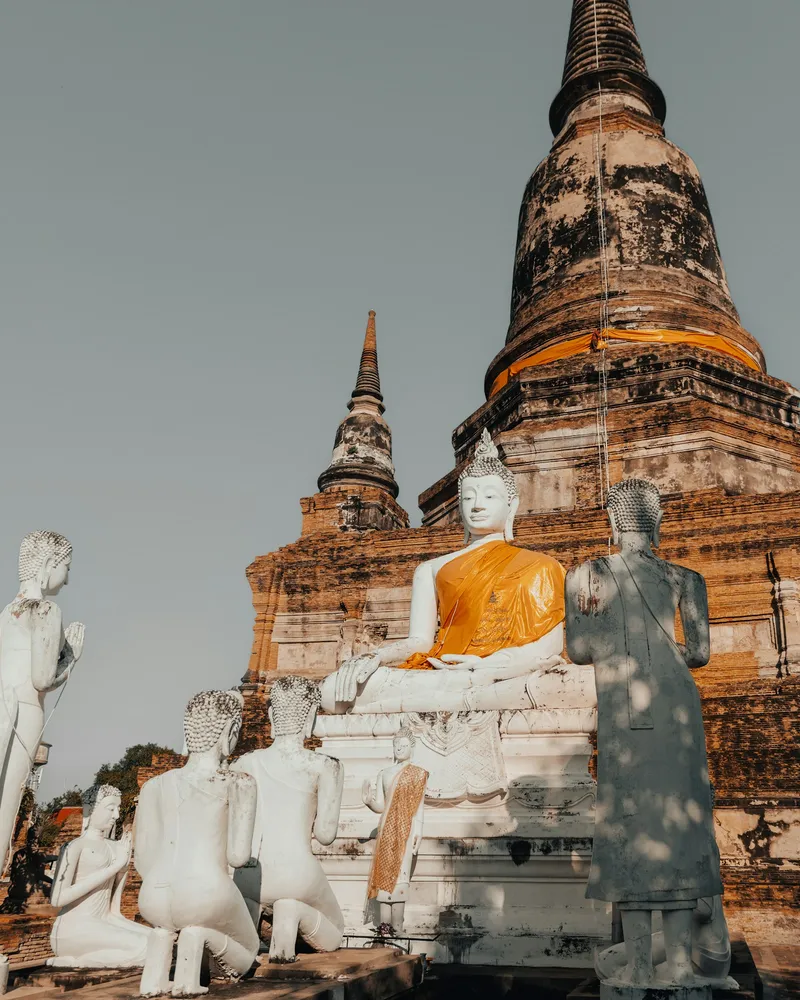
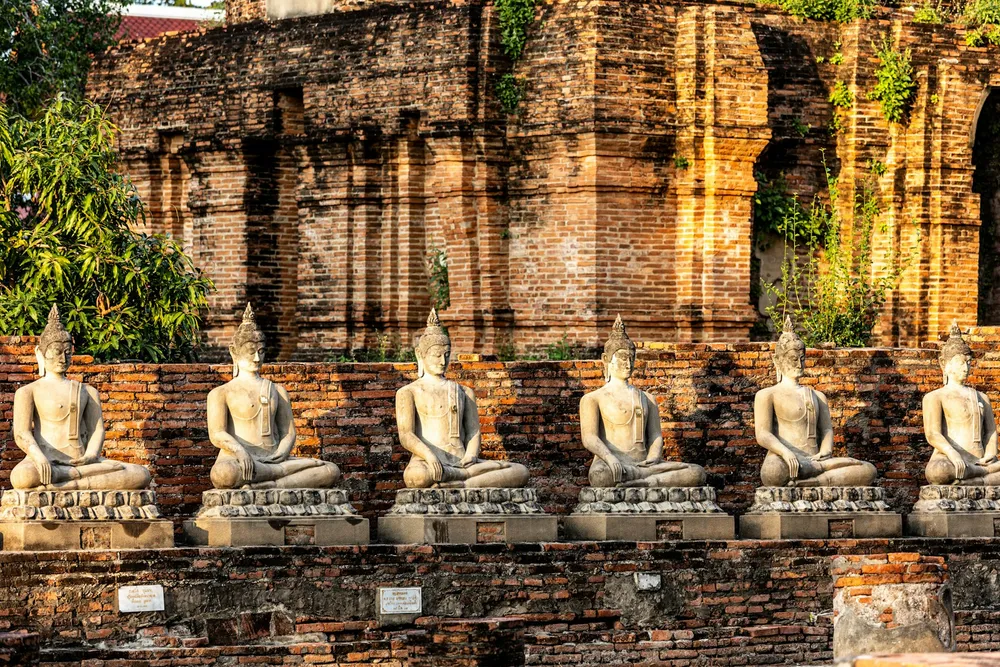
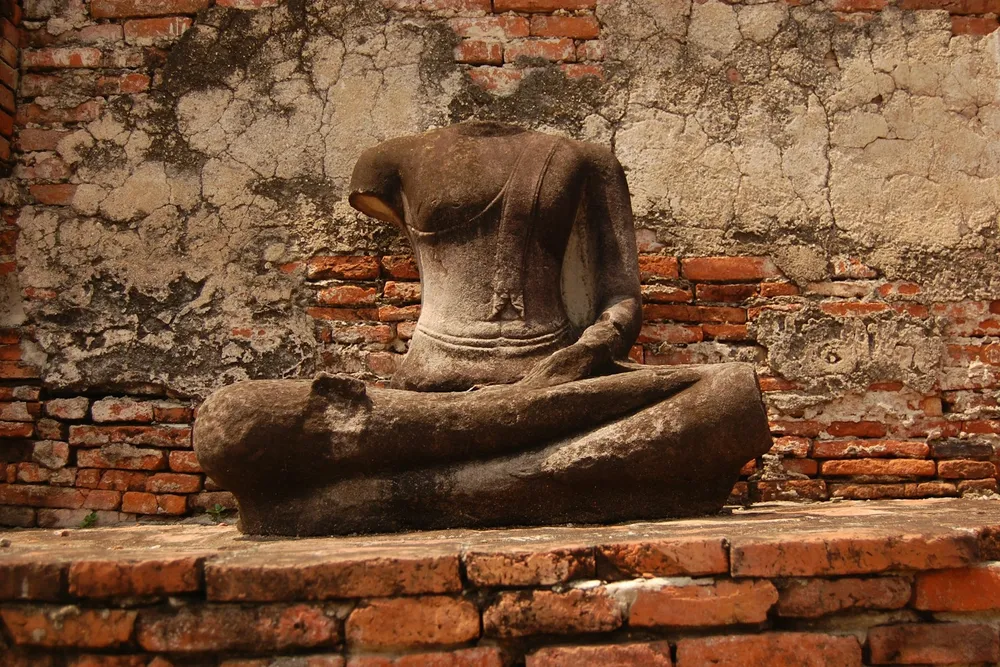
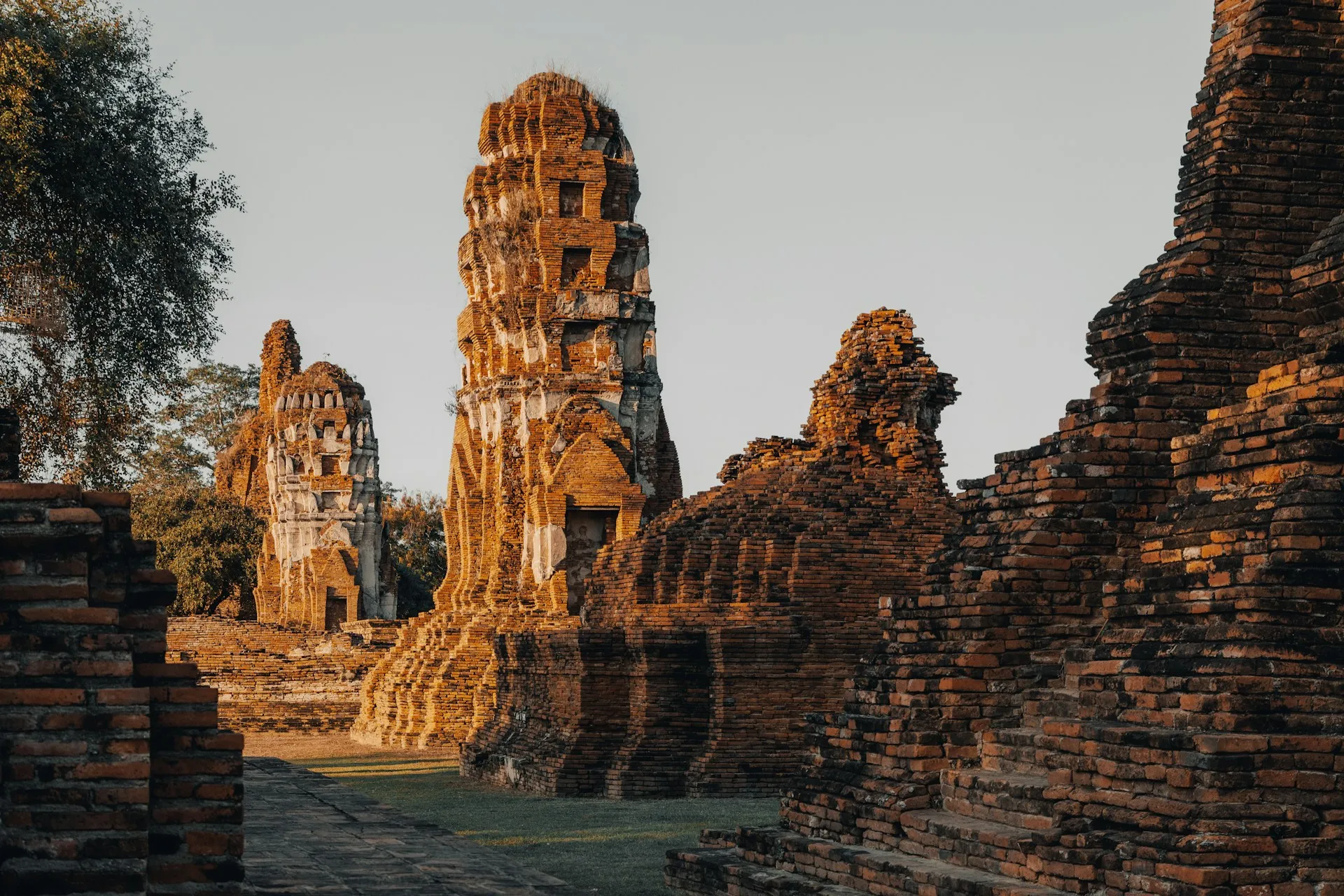
Fifty miles north of Bangkok, on an island where three rivers meet, lie the ruins of a city that was once among the largest and richest on earth. Ayutthaya was founded in 1350 and served as the capital of Siam for more than four centuries, a cosmopolitan port where Chinese, Persian, Japanese, Portuguese and French merchants kept their own quarters and European visitors wrote home in wonder at the gilded spires. In 1767 a Burmese army sacked it, burned the palaces and carried off the treasures, and the court moved downriver to found Bangkok. What survived is a UNESCO World Heritage park of brick prangs, tilting chedis and headless Buddhas scattered among the trees, and it remains one of the most evocative places in Southeast Asia.
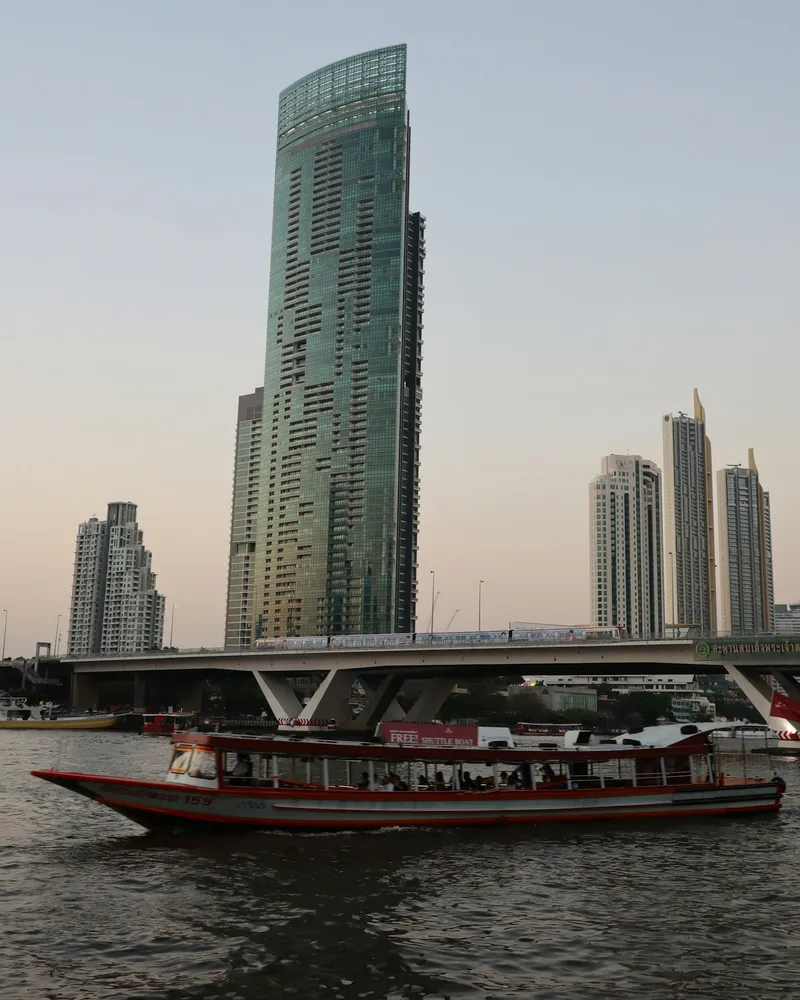
The loveliest way to arrive is the way the kings did, by water. From Bangkok you can cruise up the Chao Phraya past temples, rice barges and riverside villages, pausing at the royal summer palace of Bang Pa-In, a nineteenth-century fantasy of Thai pavilions, a Chinese mansion and a Gothic church around a lake. The usual rhythm is to drive up early and glide back down in the afternoon with lunch on board, which lands you at the ruins before the heat and gives you the river as the light turns gold. For a slower journey, converted teak rice barges make the trip over two or three days, mooring overnight on the river.
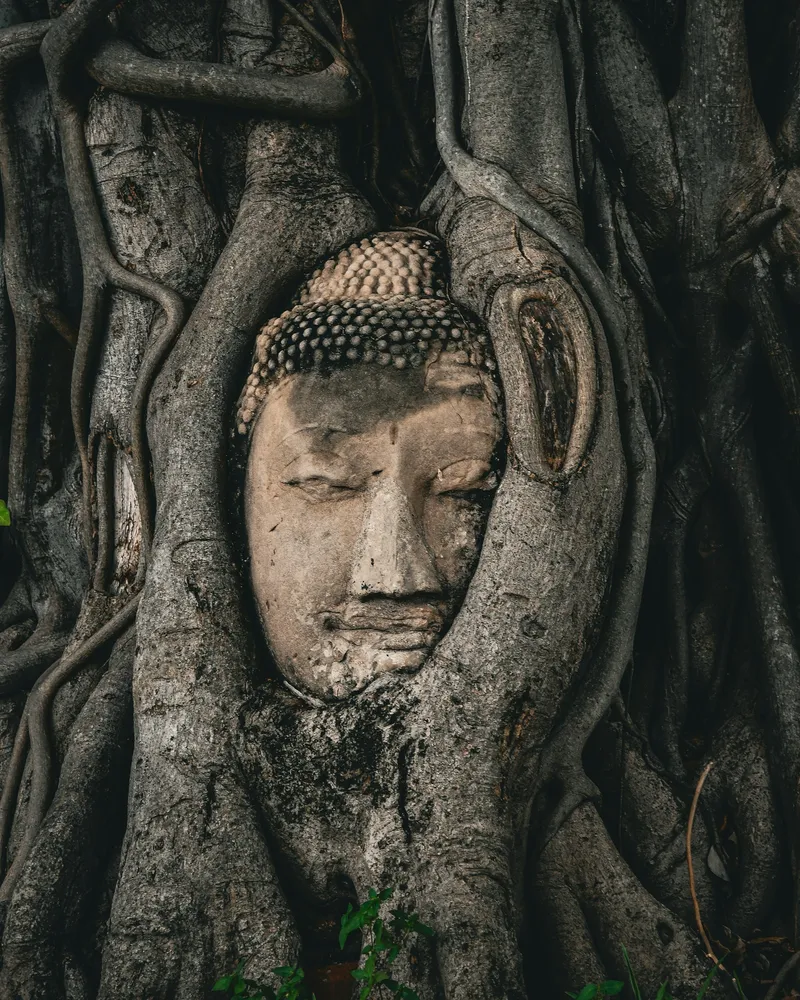
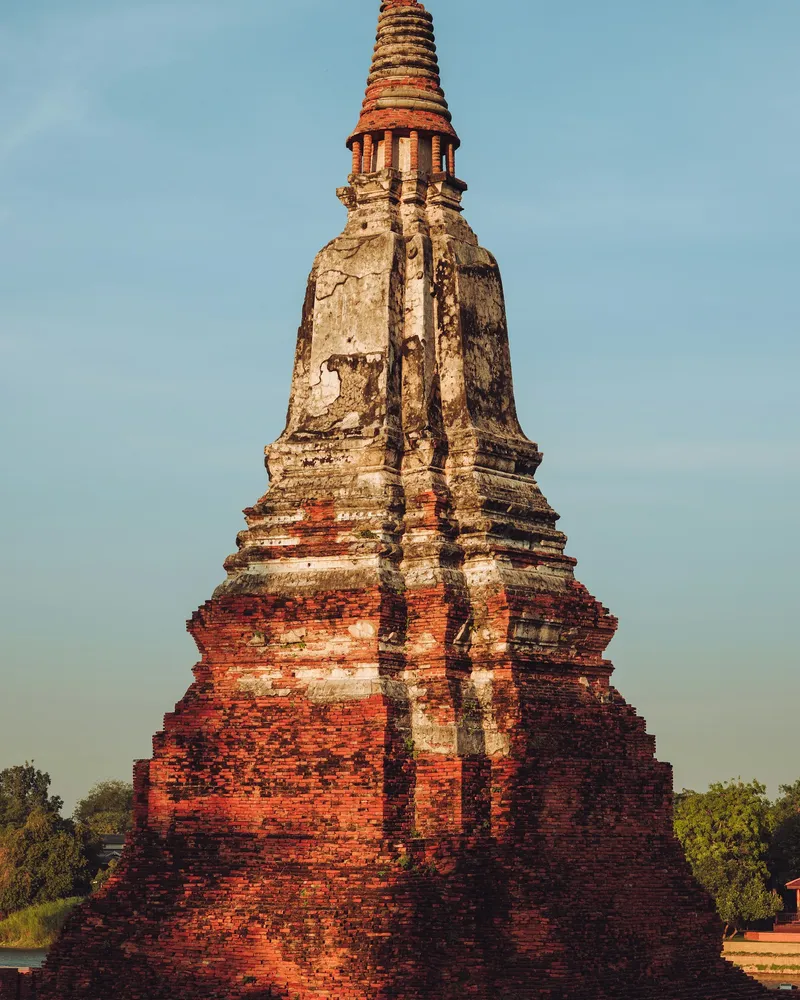
On the island, the great sights are close together. Wat Mahathat is the one everyone has seen, for the sandstone Buddha head cradled in the roots of a banyan tree; Wat Phra Si Sanphet, the former royal chapel, keeps three tall bell-shaped chedis in a row; and on the riverbank to the west, Wat Chaiwatthanaram rises in Khmer style like a miniature Angkor, best of all at sunset. We build Ayutthaya as a guided day from Bangkok with the river cruise one way, or as an overnight for those who want the ruins by lamplight and at dawn, with a guide to turn the broken brick back into a living court.