The Mekong Delta (Can Tho & Ben Tre)
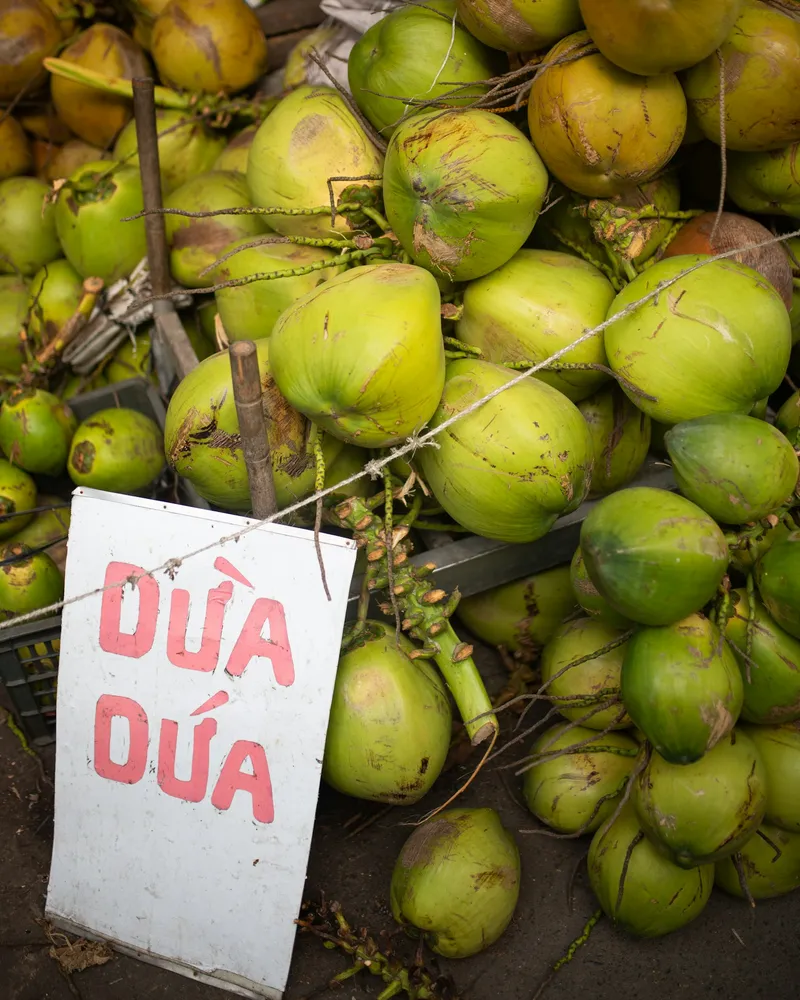
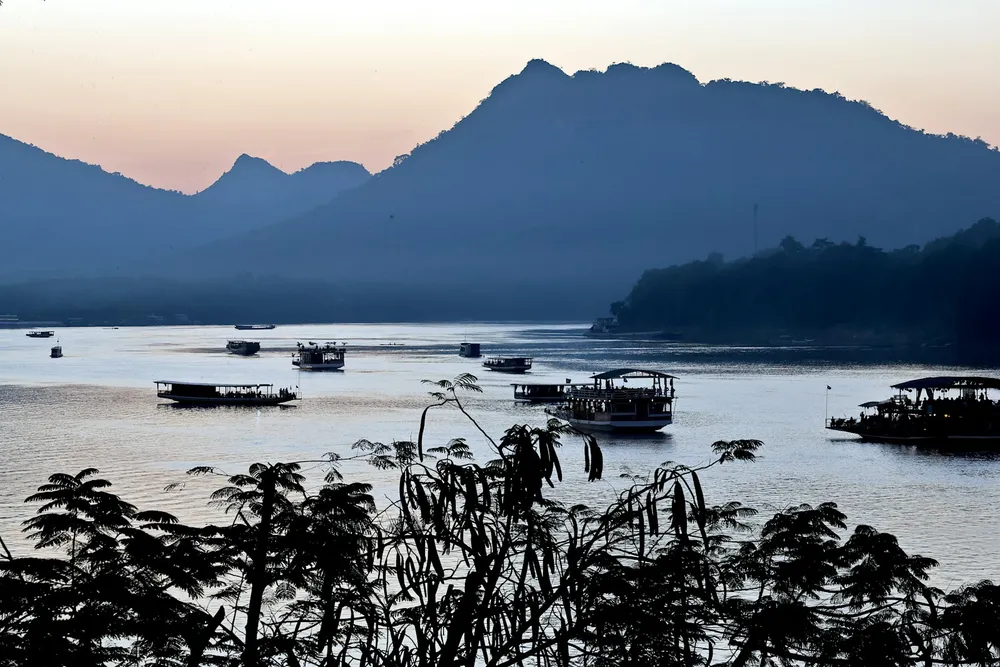
South of Ho Chi Minh City the land gives up and the water takes over. The Mekong, which has already crossed five countries from the Tibetan plateau, splits here into nine channels the Vietnamese call the Nine Dragons and spreads across a delta the size of a small nation, a flat green world of rice paddies, coconut groves, fruit orchards and a lattice of canals so dense that for centuries the roads were the rivers. Life still moves at the pace of the tide: houses stand on stilts along the banks, children wave from ferry landings, and the markets float.
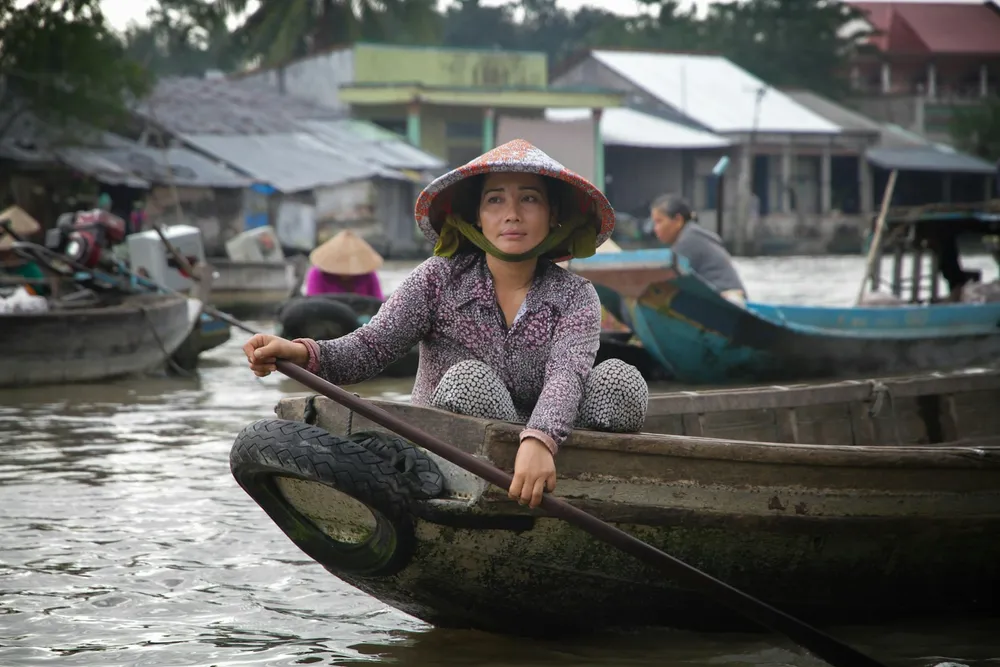
The day begins early at Cai Rang, the largest floating market in the delta, a few miles from the city of Can Tho. By first light the river is crowded with wooden boats heaped with pineapples, pumpkins and sweet potatoes, each one advertising its cargo by hoisting a sample on a bamboo pole, while little coffee and noodle boats weave between them selling breakfast to the traders. You take it in from a small boat of your own, a bowl of hu tieu noodles in hand, before the sun gets high and the market thins out. Then the boat turns off the main river and into the small canals, and the real delta closes in.
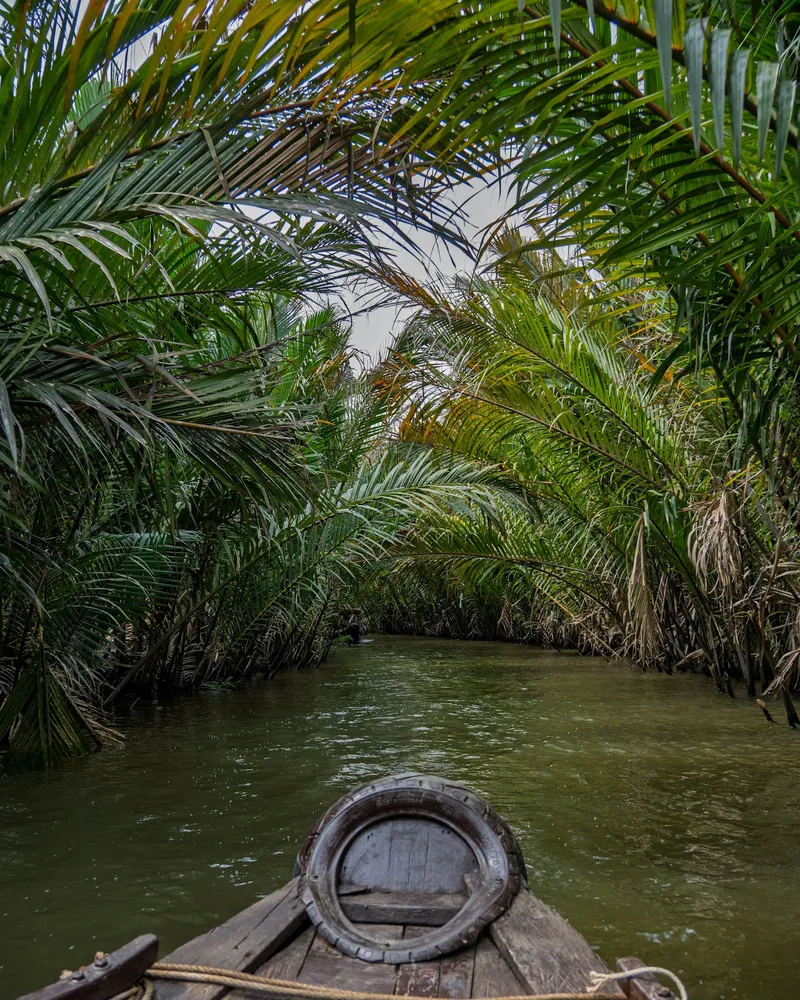
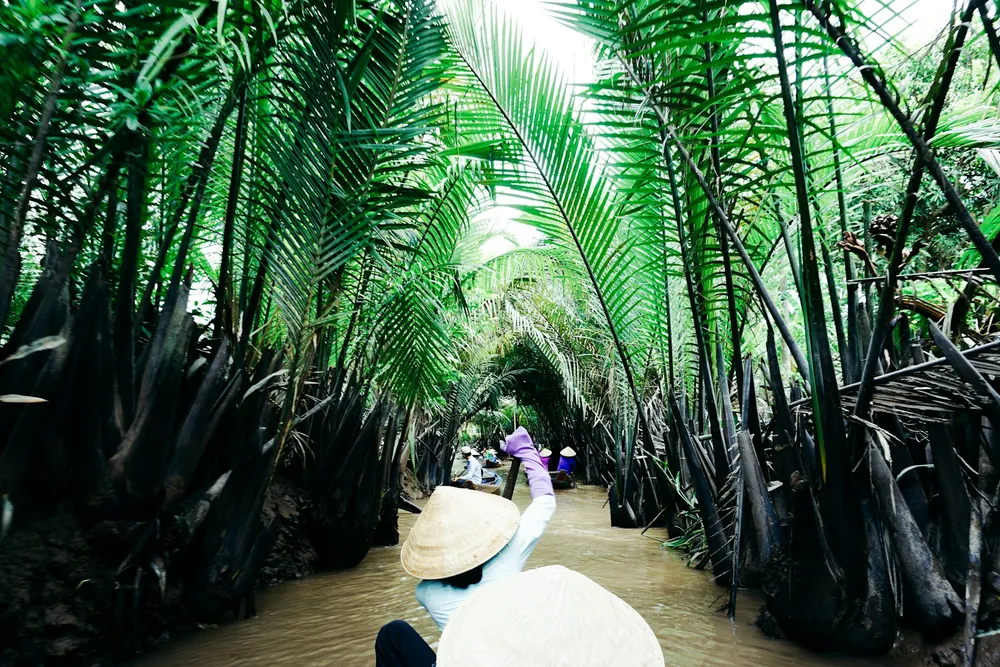
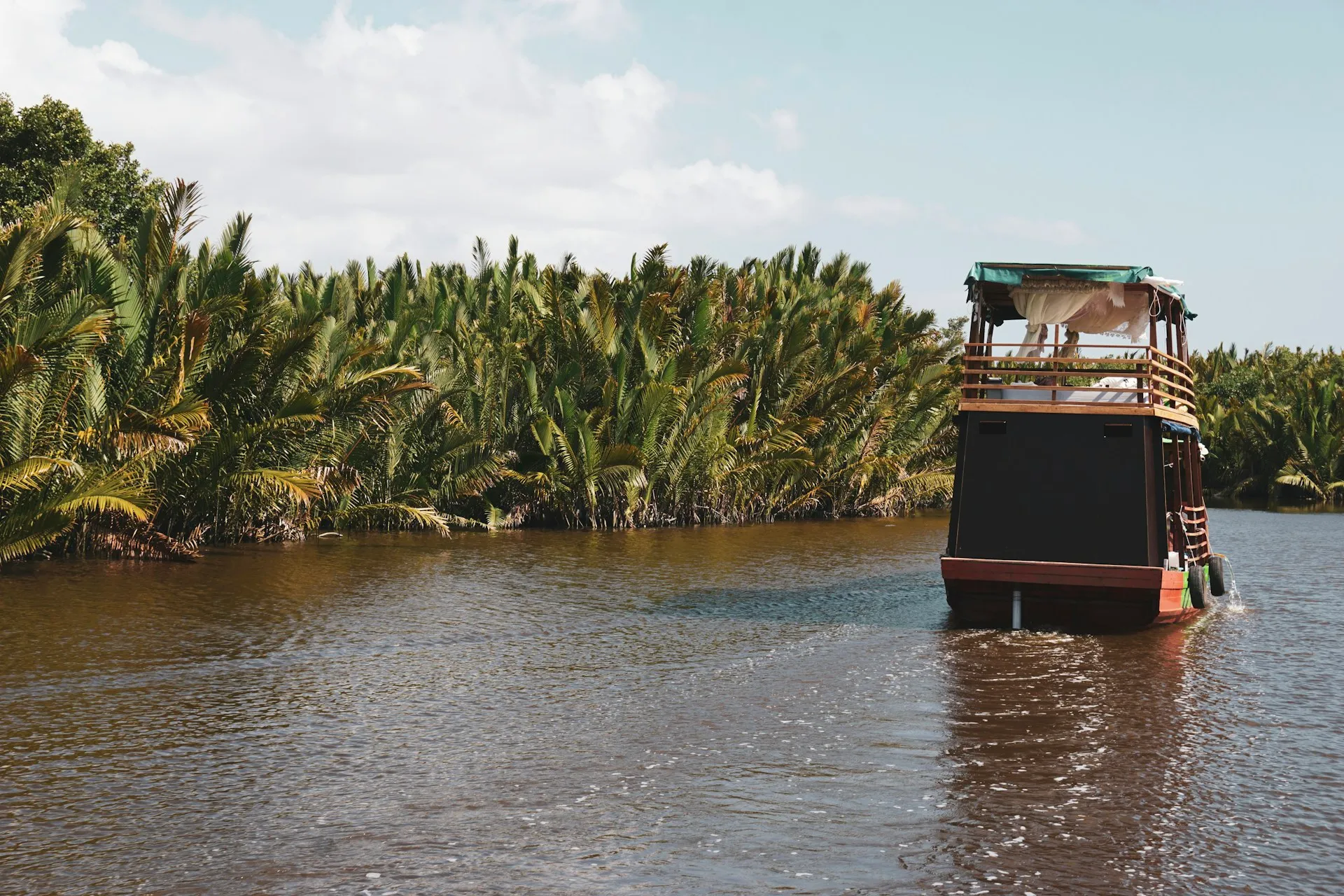
This is the sampan stretch, the part everyone remembers: a slender boat rowed by a woman in a conical hat along channels barely wider than the hull, water palms meeting overhead, the city's noise entirely gone. The day unspools from there through orchards of longan and rambutan, a workshop where coconut candy is boiled and cut by hand, a family lunch of elephant-ear fish wrapped in rice paper, and perhaps a bicycle ride along the levees. We run the delta as a long day from Saigon with a private boat and guide, or, better, with a night at a river lodge or homestay near Can Tho so the floating market comes at a gentler hour.